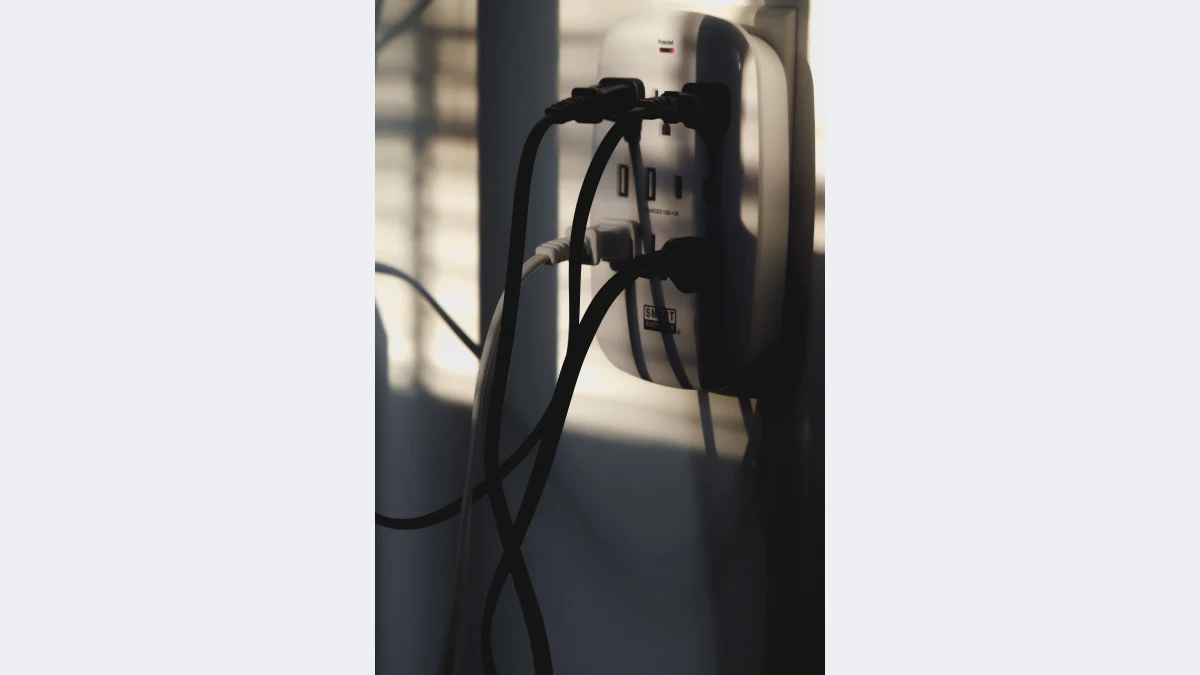
Smart Plugs Explained: What They Do and When They’re Worth Buying
You don’t need to replace every lamp or coffee maker to make your home a little smarter. Sometimes the smallest upgrade is an adapter that sits between the wall outlet and an ordinary plug.
That’s the appeal of a smart plug. It can turn power on or off remotely, follow a schedule, and sometimes respond to voice commands. But it can’t magically add every smart feature to the device connected to it—and there are important safety limits.
What does a smart plug actually do?
A smart plug is a controllable outlet adapter. Plug it into a wall socket, connect a compatible appliance, and set it up using the manufacturer’s app or supported smart-home platform. Depending on the model, you can switch power on and off, schedule operation, create automations, and check whether the outlet is active.
For example, you could schedule a living-room lamp to turn on around sunset or switch off decorative lights at bedtime. You could also turn a fan off without walking across the room—provided that fan is suitable for use with a smart plug.
A smart plug controls electrical power. It doesn’t control every function of the connected appliance. If a device needs you to press a physical start button after power is restored, a smart plug may not be able to start it remotely.
What can you use a smart plug for?
Lamps and decorative lighting
A basic lamp with a mechanical on/off switch is one of the easiest examples. Leave the lamp’s switch on, and the smart plug can control power. It’s a simple way to automate a corner lamp without buying a smart bulb.
Holiday lights
Scheduled lighting can be convenient during the holidays. If you’re using an outdoor outlet, however, choose a smart plug specifically rated for outdoor use and follow its weather-protection instructions.
Devices you want to turn off on a schedule
Some people use smart plugs to cut power to nonessential electronics overnight. Whether this saves meaningful energy depends on the device’s standby consumption and your habits; the savings may be small.
Monitoring energy use
Selected smart plugs measure electricity consumption. They can help you see how much energy a lamp or other compatible device uses over time. Not every model includes energy monitoring, and app reporting varies.
What a smart plug cannot do
A smart plug won’t make a basic lamp dimmable. It won’t change the temperature setting on a heater, adjust fan speed, or add smart controls to an appliance that doesn’t already support them. It only controls the supply of power unless the appliance offers separate smart features.
Be cautious with devices that have heating elements, motors, or safety-critical functions. Many smart-plug manufacturers prohibit or restrict use with space heaters and other high-load appliances. Never assume that a plug’s maximum wattage alone makes a particular appliance safe for unattended remote operation.
Also avoid using smart plugs for medical equipment, essential refrigeration, or anything where unexpected power loss could create a serious problem.
Wi-Fi, Matter, and smart-home compatibility
Some smart plugs connect directly to a 2.4GHz Wi-Fi network and are controlled through a brand’s app. Others use Zigbee, Thread, or another protocol and may require a compatible hub or border router. If a plug keeps dropping off the network, start by improving Wi-Fi coverage where it is installed.
You may also see the Matter logo. Matter is an interoperability standard intended to make compatible smart-home devices work across supported ecosystems. It can simplify platform compatibility, but you still need to check the specific plug’s requirements, supported features, and whether a controller or Thread border router is necessary.
If you use Apple Home, Google Home, Alexa, or another platform, verify compatibility for the exact model—not just the manufacturer’s brand.
Smart plug vs. smart bulb: which should you buy?
A smart plug makes sense when you want to turn a conventional lamp on and off. A smart bulb is better when you want dimming, color changes, or control over individual bulbs in the same fixture.
If a lamp has multiple bulbs and you only need the entire lamp on or off, a smart plug may be the simpler option. If you want warm light in the evening or adjustable brightness, a smart bulb gives you more control.
| Need | Better starting point |
|---|---|
| Turn a basic lamp on/off remotely | Smart plug |
| Change brightness or color | Smart bulb |
| Schedule decorative lights | Smart plug |
| Control several bulbs independently | Smart bulbs |
| Measure a compatible appliance’s energy use | Energy-monitoring smart plug |
Five things to check before buying
Electrical rating. Check the plug’s rating for the specific type of load. Motors and compressors can draw a brief surge at startup that exceeds their running current. Follow the manufacturer’s limits for that load type, even when the appliance’s running wattage is below the plug’s advertised maximum.
Physical size. Some plugs are wide enough to block the second socket in a duplex outlet. Compare dimensions if you need both outlets.
Connectivity. Confirm whether the plug needs 2.4GHz Wi-Fi, a separate hub, or a Thread border router. Don’t assume every model works on a 5GHz-only network.
Platform support. Look for explicit compatibility with the smart-home app or assistant you use. Check which features remain available if you switch platforms.
Schedules and privacy. Consider whether schedules run locally or depend on cloud connectivity, and review what account or data access the app requires.
Are smart plugs worth it?
They can be, especially for one or two small tasks you repeat every day. Automating a lamp or decorative lights can be satisfying because the result is immediate and easy to understand.
But a smart plug isn’t a universal upgrade. If you don’t need remote switching or scheduling, a conventional timer or ordinary outlet may be enough. And if the connected device requires manual input after power is restored, the smart plug might not deliver the convenience you expect.
Frequently asked questions
Do smart plugs work without internet?
It depends on the model and automation method. Some local controls or schedules may continue working, while remote access and cloud-dependent features may stop. Check the manufacturer’s documentation.
Can a smart plug save electricity?
Potentially, by cutting unnecessary standby power or helping you monitor consumption. The actual savings depend on the device and usage, so don’t assume a large reduction in your bill.
Can I use a smart plug with a space heater?
Plug a portable electric space heater directly into a wall outlet, as the U.S. Consumer Product Safety Commission recommends. A smart plug’s wattage rating alone doesn’t make it suitable for a heater.
Will a smart plug work with my security camera?
It may switch power to a compatible camera, but cutting power can disable recording, alerts, and security coverage. For camera setup and reliability considerations, read our smart home security camera buying guide.
The bottom line
A smart plug is best thought of as a remote-controlled power switch with scheduling and, on some models, energy monitoring. Start with a simple, safe use case such as a lamp. Check electrical ratings and platform compatibility before buying, and don’t expect a smart plug to turn every ordinary appliance into a fully smart one.